
Explaining McIlroy, through fairways and rough
Alan Shipnuck's biography of the 6-time major champ goes under the hood.

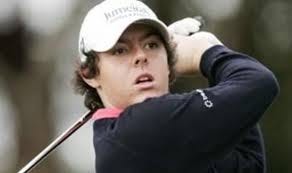
Rory McIlroy’s life bag is almost as cluttered as his golf bag. One produces wild, diagonal drives just before it comes up with pinpoint 7-irons. The other distributes extraordinary kindnesses just before it comes up with crass insults. One can roar back from six strokes behind or give away six-stroke leads. The other came from modest, blue-collar surroundings and now revels in the highest life imaginable.
The one consistency is his enormous golfing talent, which McIlroy redeemed almost instantaneously and then struggled to recover. We live in a coarse, dismissive sporting society, in which failure is considered irredeemable, and losses are supposed to reduce a player’s appetite and very character. Because McIlroy has glued the pieces of his game together after a multitude of shatterings, he has become the one foreign golfer who has made American galleries stand up and celebrate, at least when he’s not playing for Team Europe. It happened again on Sunday, when McIlroy led his fans over the river and through the woods and into the pine straw off the 18th fairway, from which he fashioned the bogey that gave him a second consecutive Masters championship and his sixth major title. He was playing with Cameron Young, from suburban New York and Wake Forest, as American as you can get, and yet Young knew he wouldn’t be the people’s choice.
Being McIlroy is a many-splendored and many-splintered thing. It is best summed up in “Rory,” a biography from Alan Shipnuck, possibly due for repeated updating as McIlroy continues to write his own story, in longhand.
McIlroy is the most popular golfer since Phil Mickelson, and his helter-skelter style is reminiscent of Mickelson, Arnold Palmer and Jordan Spieth. Unlike them, he has taken great pains to become complete. He once was just a bomber who beat up on golf courses the way an SEC football team devours its non-conference schedule, but McIlroy won this Masters from around the greens, and he was far more consistent with a putter than with a driver. Mickelson won hearts because he made eye contact with the galleries and signed every autograph he could. McIlroy doesn’t pander, but somehow he exudes normality, or as much as one can, in between 350-yard drives.
McIlroy is the only child of Gerry and Rosie, just outside Belfast in Northern Ireland, and their role in this story is pivotal. Rory had obvious talent from the very beginning. But at one point he asked his parents why he didn’t live in a normal family. The reason was that Gerry was scrambling to work as many jobs as he could, and Rosie would go to her third-shift job as soon as Gerry returned. They barely saw each other, and every spare penny went toward Rory’s equipment and plane tickets, to face worldwide competition as soon as possible.
These were not futile investments. In 2005, Gerry wagered 500 pounds, at 200-to-1 odds, that his 15-year-old son would win the British Open before he turned 26. Rory did so in 2014, and Gerry won $171,000. Gerry now is a member at Seminole Golf Club in Florida, near one of Rory’s houses, and he has hobnobbed with the famous. The parents didn’t attend the 2025 Masters that Rory won and, according to Rory, were reluctant to come this year because they thought they’d be a jinx.
Rory briskly became the top young player in Europe. As that was happening, he befriended Harry Diamond, who was five years ago and ran bars and restaurants in Belfast. Diamond is now his caddie and de facto big brother, and on Sunday he counseled McIlroy on when to wait for the winds to become steady enough for the tee shot on No. 12, the toothsome par-3 that McIlroy birdied for a 2-shot lead.
Rory was left off the first Walker Cup team for which he was eligible. That team lost to the U.S. by one point. Meanwhile, Rory was shooting 61 at Royal Portrush, one of the toughest, classic courses in the U.K. Like Tiger Woods, he has always thrived when he has felt slighted.
There have been golfing Mozarts before. Many of them are selling golf clubs today. McIlroy showed how different he was in 2011. First he threw away a 4-shot lead at the Masters and shot a tearful 80. His next tournament was in Malaysia, where he shot 14-under and finished third. Two months later he conquered the U.S. Open by a record eight shots. Somewhere in there, he spent time in Haiti as a U.N. Ambassador and reminded himself of a world at least twice-removed from his. In fact, McIlroy is remarkably obsession-free, always receptive to an interesting book or a consuming vacation.
Yet, as one longtime acquaintance said, you don’t tell McIlroy what to do. When he met Caroline Wozniacki, who was on her way to become the world’s No. 1 tennis player, he broke up with his longtime girlfriend Holly Sweeney. When he was engaged to Wozniacki and had even sent out wedding invitations, with Serena Williams planning the bachelorette party, he woke up one day and called the whole thing off. He filed for divorce from his wife, Erica Stoll, and then the two reconciled a month later. He moved past two management groups in his career, paying a hefty sum to settle a lawsuit with the second one, but has invested shrewdly enough to become an incipient billionaire.
“That’s just how I am,” McIlroy said, referring to his belated decision to perfect his short-iron and wedge game. “I have to make things my own idea.”
When LIV golf came along and threatened to use its petrodollars to kidnap the world’s best players, McIlroy took his shield and went to the front. He blasted LIV organizer Greg Norman and was antagonistic toward those PGA Tour players who left. But in the end, he and Tiger Woods came up with the “signature events” plan that fattened some selected PGA Tour purses and closed the door to the lower-tier players, although, as he said, they can always “play better” ‘and join the party eventually. McIlroy’s involvement and visibility did not help his golf game, but he’s ended 15 of the past 16 years in the Top 10, and never lower than 11th.
McIlroy was known as the “cocky little fooker” to some of his peers back home, and his trash-talking can sometimes cross the line. J.J. Spaun, who had nearly quit the game in 2024, got into a Players Championship playoff with McIlroy last year but lost when his tee shot found water on the 17th. At the Masters, Spaun was on the way to a playoff in the par-3 contest when McIlroy crossed his path and gratuitously said, “Better get the club right this time.”
He also has trouble resisting backtalk on social media. And when McIlroy’s space is invaded, he turns no cheek. At the Players he removed a heckler’s cellphone, and at the 2023 Ryder Cup he wanted to charge the U.S. team room after an 18th hole argument with caddie Joe LaCava. At last year’s Ryder Cup, the Long Island fans mercilessly and obscenely rode him, and seized upon rumors of stride within McIlroy’s marriage to Erica Stoll. McIlroy (and Lowry) responded almost in kind, and after they combined for a fourball win, Rory was asked if this had been a satisfying win. “Very fucking satisfying,” he replied.
Yet Shipnuck’s comprehensive and clear-eyed book is full of tributes to McIlroy’s essential niceness, to his fealty to an European Tour on which he doesn’t play regularly anymore, to the fact that he remembered the name of Nick Faldo’s daughter seven years after Faldo had told him, to the comparatively relaxed way he greets the public at large. All in all, golf could have, and has had, far less graceful ambassadors than Rory McIlroy, because imperfection is universal to all human beings, and can be survived by those who fully digest their mistakes and carry on. In that sense golf isn’t life, until it is.