
They left us in 2025
A list of sports figures that we'll undoubtedly miss.

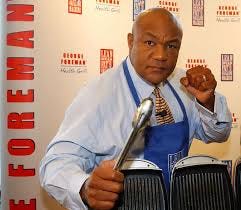
George Foreman, 76, March 21: Fearsome heavyweight champion of the 70s who lost to Muhammad Ali in the Rumble In The Jungle, but came back to beat Michael Moorer in 1994 and, at 46, become the oldest heavyweight champion. Foreman was 81-5 with 68 knockouts. He was a national hero in 1968 when he won an Olympic gold medal and proudly displayed the American flag. Along the way Foreman became a minister, an HBO analyst, and a wildly successful salesman of George Foreman Grills. All five of his sons are named George.
“I’m on a seafood diet. I see food and I eat it.”- George Foreman.
Hulk Hogan, 71, July 24: Born Terry Bollea, Hogan was a six-time WWF champion and helped make wrestling a national phenomenon. There were reportedly 171 action figures made of Hogan, and he was a fixture at Wrestlemania. His battles with Randy Savage, Ric Flair and The Undertaker are still discussed. Controversy followed Hogan out of the ring, with steroid scandals and accusations of racist speech, and he spoke in favor of Donald Trump at the 2024 Republican convention. He also underwent 25 operations. His net worth was $24 million at the time of death.
“You can’t possibly overrate his significance in the history of the business.” — Wrestling historian Dave Meltzer.
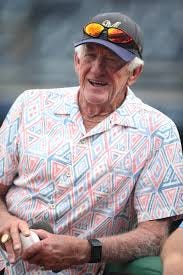
Bob Uecker, 90, Jan. 16: A .200-hitting catcher who fed off his futility to become baseball’s leading comedian. Uecker’s guest appearances on The Tonight Show with a laughing Johnny Carson thrust him into a show business career that included the TV series Mr. Belvedere, and the part of boozy play-by-play man Harry Doyle in the movie Major League. But Uecker was a dead-serious broadcaster for his hometown Milwaukee Brewers and was in the booth for 54 years, winning the Frick Award bestowed by the Hall of Fame.
“I was once named Minor League Player of the year. Unfortunately I’d been in the majors for two years.” — Bob Uecker.
D. Wayne Lukas, 89, June 28: His thoroughbreds won 4,953 races, including a record 20 in the Breeders Cup. Lukas won 15 Triple Crown races, and Winning Colors was only the third filly to win the Kentucky Derby. He’s the only trainer to win six consecutive Triple Crown events. A former high school basketball coach, Lukas was the first trainer to nationalize his operation, with horses running constantly from coast to coast, and won $300 million in purses all told. He died 17 days after Tour Player became the last horse to win for him.
“There once was a trainer called D. Wayne Lukas, but only once.” — Joe Hirsch, racing writer.
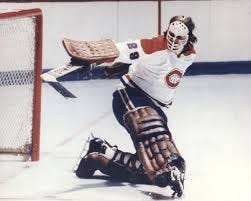
Ken Dryden, 78, Sept. 5: Hall of Fame goaltender who won a Stanley Cup in 1971 for Montreal although he’d played only six games. The next year he won the Calder Trophy as Rookie of the Year. The 6-foot-4 Dryden won five Vezina Trophies and had 46 shutouts in 397 games. He paused his career to get a law degree after a salary dispute, then returned to the Habs and helped them win six Cups in his eight seasons overall. Later he became a member of the Canadian Parliament and wrote a series of influential hockey books, including the classic “The Game.”
“For each of us it’s a race, a short, quick race we don’t know we’re in until we start to lose.” – Ken Dryden.
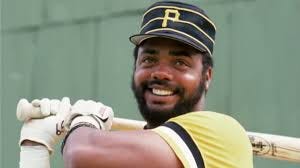
Dave Parker, 74, June 28: Ebullient two-time N.L. batting champ and 1978 Most Valuable Player, who was on championship teams in Pittsburgh and Oakland. The 6-foot-5 Parker was a feared right-field thrower and had 2,712 hits, along with 339 home runs. At 34, with Cincinnati, he led the N.L. with 42 homers and 125 RBIs. Parker died of Parkinson’s disease between his Hall of Fame election and his actual induction this year.
“I told my mother at 8 years old that I would be a baseball star and one day buy her a house. Well, I did that in 1978.” — Dave Parker.
Ryne Sandberg, 65, July 28: Chicago’s most popular No. 23 before Michael Jordan came along. Sandberg was a Hall of Fame second baseman who did more than anyone to reinvigorate the Cubs’ franchise. A 20th-round pick by the Phillies, Sandberg won the 1984 MVP for the Cubs and wound up with 282 homers and 2,386 hits, leading the league with 40 home runs in 1990. . He later managed the Phillies.
“I got to meet Ryno for the first time this spring and he treated me like I’d worn a Cubs uniform my whole life.” — Matthew Boyd.
Davey Johnson, 82, Sept. 5: Managed the world champion 1986 Mets and four other teams, and made the playoffs with all of them except one. Johnson’s .562 win percentage is better than those of Walter Alston and Bobby Cox. Five times his teams won division titles. Brash and confident and not afraid to confront management, he was one of the first to use computerized data, in the late 80s, to determine lineups. As a player, he was the first to hit two pinch-hit grand slams in the same season.
“Davey was the best manager I ever played for. He let us do our thing.” — Darryl Strawberry.
Jim Marshall, 87, June 3: Enduring defensive end who played 20 years, 19 for the Vikings, and had 270 consecutive starts and 282 games, both NFL records for a defensive player. When he retired in 1979 he had played in every game in Viking history. His 30 recovered fumbles was an NFL record, and he was the team captain in 14 years. He also was an adventurer who jumped out of airplanes over 2,000 times and nearly died in a glider accident. In 1964 Marshall recovered a fumble, got turned around and ran to the wrong end zone, giving San Francisco a safety.
“No one in the game played longer and harder than Jim Marshall.” — Steve Sabol, NFL Films.
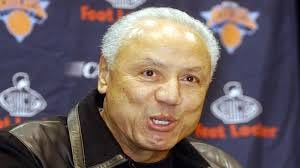
Lenny Wilkens, 88, Nov. 9: The alltime leader in NBA games coached, and at the time of his retirement he was the wins leader as well. Wilkens was the only man to make the NBA’s 75th anniversary team as a player and a coach. As a point guard Wilkens was a nine-time All-Star. Soft-spoken and serious, he coached the champion Seattle Supersonics in 1979 and the gold medal U.S. Olympic team in 1996, and was the second black coach in NBA history after Bill Russell.
“He was a great soul. He set a standard with his kindness.” — Jack Sikma.
Paul Tagliabue, 84, Nov. 3: NFL commissioner from 1989 to 2006 and became a Hall of Famer in 2021. The former Georgetown basketball player was criticized for reacting slowly to the NFL’s concussion crisis and said the controversy was “one of those pack journalism issues.” He moved the Super Bowl out of Arizona when that state refused to honor Martin Luther King’s birthday, and he was decisive in returning NFL competition to the Superdome after Hurricane Katrina hit New Orleans. Tagliabue established the World League of American Football and supervised the addition of four expansion teams.
“The future doesn’t just happen. It’s shaped by decisions.” Paul Taglaibue.
Bill McCartney, 84, Jan. 10: Coached Colorado to a national championship in 1990 and took a moribund program to three Big Eight titles. Three times, McCartney’s Buffaloes finished in the top three in the final polls. McCartney was just as well known as the organizer of Promise Keepers, an all-male organization devoted to Christian values and fidelity. He was a fervent opponent of abortion, prompting occasional protests on campus. His star quarterback, Sal Aunese, died of cancer, after he had fathered a son with McCartney’s daughter Kristy.
“All coaching is, is taking a player to a place he can’t take himself.” — Bill McCartney.
Michael Ray Richardson, 70, Nov. 11: Flamboyant NBA guard who starred for the Knicks and Nets before the NBA banned him for failing a drug test for the third time. Richardson was a four-time All-Star and an All-Defense selection twice. With New Jersey, he sparked a first-round playoff upset of the defending champion 76ers. The league waived his suspension in 1988 but by then Richardson was establishing himself in Europe. He won back-to-back championships as a coach in Canada, and in the CBA.
“When I see him, I see a small version of me.” — Magic Johnson.
Jim Irsay, 65, May 21: Worldly and inquisitive owner of the Colts, who led the NFL in wins during the 90s, went to two Super Bowls with Peyton Manning, and won once. Irsay was one of the leading collectors in America, with an original copy of the Alcoholics Anonymous manuscript, and guitars owned by Elvis Presley, George Harrison, Jerry Garcia, John Lennon and Paul McCartney. The NFL suspended Irsay for six months for opioid addiction. Irsay toured the country as part of the Jim Irsay Band, which occasionally featured Kenny Wayne Shepherd and John Mellencamp.
“The collection is not mine. I always say, you never see a hearse pulling a U–Haul.” – Jim Irsay
Junior Bridgeman, 71, May 11: Solid NBA guard for 13 years, most notably for the Milwaukee Bucks. Bridgeman averaged 13 points and, at the time of his retirement, had the Bucks’ record for most games played. He also was the president of the league’s Players Association. Bridgeman now owns 10 percent of the Bucks themselves, because he wound up owning 160 Wendy’s and 120 Chili’s. Then he bought Ebony and Jet magazines. At one point Bridgeman was the fourth richest ex-athlete with $32 million per year, behind Michael Jordan, Arnold Palmer and David Beckham.
“To me he’s one of the greatest stories ever. Every time I’m around him, I try to pick his brain.” — Charles Barkley.
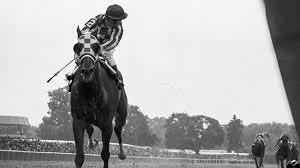
Ron Turcotte, 84, Aug. 22: Canadian jockey who rode Secretariat to the Triple Crown in 1973, and also took Riva Ridge to wins in the Kentucky Derby and the Belmont Stakes in 1972. Turcotte, one of 12 children of a New Brunswick lumberjack, became the first jockey to win five out of six Triple Crown races. Secretariat’s 31-length victory in the Belmont was immortalized by the photo of Turcotte looking back to find the competition. Four years later Turcotte fell off a horse at Belmont Park and was rendered a paraplegic, with a fractured sternum and a crushed spine.
“It was love at first ride.” — Ron Turcotte.
Fuzzy Zoeller, 74, Nov. 27: Jocular winner of the Masters and the U.S. Open, and a member of three Ryder Cup teams. Zoeller beat Greg Norman by eight strokes in an Open playoff at Winged Foot in 1983. Four years earlier he survived a Masters playoff with Ed Sneed and Tom Watson, and was the first Masters rookie to win since Horton Smith won the inaugural event in 1934. After Tiger Woods won the 1997 Masters, an admittedly inebriated Zoeller told a reporter to tell Woods “not to serve fried chicken, or collard greens,” at the next year’s Champions Dinner. Zoeller subsequently lost most of his commercial endorsements.
“The great thing about golf is that there’s no end to it unless you’re dead. You just go from here to the Senior Tour.” — Fuzzy Zoeller.
Lee Roy Jordan, 84, Aug. 30: Four-time Pro Bowl linebacker who won a Super Bowl with Dallas and a national championship at Alabama. Jordan is still the second-leading tackler in Cowboys history and returned three interceptions for touchdowns even though he was known for his run defense. Jordan was tough on teammates, too, hitting them just as hard in practice as he did the opposition in games. Alabama coach Bear Bryant said Jordan would “make every tackle if the ballcarrier would stay in bounds.”
“I never thought football was a job. I grew up picking cotton.” — Lee Roy Jordan.
Shigeo Nagashima, 89, June 3: Five-time MVP in Japan, where he hit 444 home runs and was credited with advancing the sport. As a manager of the Yomiuri Giants he won two championships. He also recruited Davey Johnson, the first American to play in Japan professionally. A third baseman, he also was voted MVP of the Japan Series four times. He was known as Mr. Pro Baseball or Hot Man. He was offered a chance to play for the Dodgers in 1966 but the Giants owner wouldn’t cooperate and said baseball in Japan “would be set back 10 years.”
“I was fully aware that professional baseball is for the fan. I thought of various ways to make them happy, such as defense and baserunning.” – Shigeo Nakashima.
Steve McMichael, 67, April 23: Hall of Fame defensive tackle who was part of the Chicago Bears’’ historic defense in 1985. McMichael was a two-time first-team All-NFL player and played 13 years with the Bears. Known as “Mongo,” McMichael spun his irascible personality into a profitable pro wrestling career. He was diagnosed with ALS in 2021 and died this year, a few months before his Hall of Fame induction. He was also known for attending a Cubs’ game to sing “Take Me Out To The Ballgame,” and using the microphone to criticize umpire Angel Hernandez, earning an ejection. “Thank God New England got rid of me. They thought I was a little weird, and I guess I am.” — Steve McMichael.
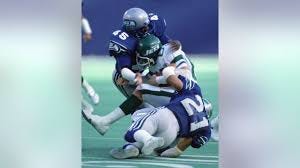
Kenny Easley, 66, Nov. 14: He only played seven years and retired with a kidney ailment, but he was a Hall of Famer, a four-time All-Pro and was the NFL Defensive Player of the Year in 1984. Easley had 32 interception and returned three for interceptions. The safety from UCLA gave the Seattle defense some menace. He sued the Seahawks after his kidney problems were diagnosed, when doctors said Easley’s overuse of Advil contributed to the condition. The suit was settled later.
“There were three words to describe playing against Easley: Terrible, bad and awful.” – Dan Reeves.
Fay Vincent, 86, Feb. 1 — Baseball commissioner who was promoted after Bart Giamatti died of a heart attack. Vincent was chairman of Columbia Pictures and a Coca-Cola executive when Giamatti hired him as deputy. He finished up negotiations with Pete Rose, who was suspended for gambling, and Rose agreed to leave the game without further action. He negotiated a difficult Basic Agreement that preserved the 1990 schedule, and banned George Steinbrenner after the Yankee owner hired a gambler to find negative information on Dave Winfield. He also suspended pitcher Steve Howe permanently for drug violations. With the game in a ratings and attendance slump, the owners essentially fired Vincent in 1992.
“People have called me the last commissioner. If so, it’s a sad thing.” – Fay Vincent.
George Raveling, 88, Sept. 1 —Enthusiastic college basketball coach who, as a kid, was on the podium with Martin Luther King and got the original “I Have A Dream” speech from the civil rights leader. Raveling was a brilliant recruiter for Lefty Driesell at Maryland and took Washington State to two NCAA appearances. He also coached at Iowa and USC and became a Nike executive. Raveling brought Michael Jordan to Nike, which developed he Air Jordan shoe. Jordan only agreed to grant the rights to the movie if Raveling’s character was included.
“Nothing in life is of any value unless you can share it with others.” — George Raveling.
Marshawn Kneeland, 24, Nov. 6: Promising defensive end for the Dallas Cowboys who took his own life after a police chase near the Cowboys’ headquarters in Frisco, Tex. Kneeland came to the Cowboys from Western Michigan and had scored a touchdown in a Monday Night game three nights before. Kneeland reportedly had never gotten past the death of his mother in February of 2024. During the chase, Kneeland’s car was clocked at 145 mph, and his girlfriend told police that he had threatened to “end it all.” She had just learned she was pregnant.
“We’re going to continue to shine a light for him and we’re blessed to continue his light for him.” – Dak Prescott.
Bernie Parent, 80, Sept. 21: Beloved Flyers’ goaltender who was the key to back-to-back Stanley Cups in 1974-75. Parent was MVP of the playoffs both years. Although he was often holding the fort in shorthanded situations, he had 12 shutouts in each year and in 1974 he had a 1.89 goals-agaisnt with a .932 save percentage. Parent retired with an eye injury at 34 and was an ambassador for the club until his death. Flyers fan wore bumper stickers that read “Only the Lord saves more than Bernie Parent.” Parent was an alcoholic but spent his last 46 years sober, and helped the Flyers raise millions through their foundations.
“Bernie was one of those lucky people who never had a bad day.” – Bobby Clarke.
Greg Biffle, 55, Dec. 18: NASCAR driver who came from a small town in Washington to win 19 races in the sport’s top series. In the truck series in 1999, Biffle won a record nine events. In 2014 Biffle set a record by finishing 89 consecutive races. He ended his fulltime career in 2017 and dabbled in broadcasting. In 2024 Biffle became a local hero by flying his helicopter into remote western North Carolina sites that had been stranded by the rains of Hurricane Helene. He made six to eight flights for 13 days and brought supplies. In December, he and his family were killed when his plane crashed in Statesville, N.C.
“People are in need, and I don’t want to leave a soldier behind.” – Greg Biffle.
Bobby Jenks, 44, July 4: Fireballing reliever who set a record in 2007 by retiring 41 consecutive batters. He was the White Sox’s closer when they won the 2005 World Series. He began his career with the Angels but ran into alcohol problems and let himself get out of condition, so he was designated for assignment. Back injuries retired Jenks after he was traded to the Red Sox, and he developed an addiction to painkillers. Jenks died of cancer in Portugal, the home of his second wife.
“He had a closer mentality but when he left the mound it’s like, ‘We’re going to Disneyland tomorrow.’ That kind of guy.’’ – Ozzie Guillen.
Dick Barnett, 88, April 27: Deadly lefthanded shooter who helped the Knicks to NBA titles in 1970 and 1973, and did the same for the Lakers in 1972. At Tennessee State he helped win three consecutive NAIA titles, the first time a historically black college won an integrated college title. He and the Tigers were inducted in the Hall of Fame in 2019 after Barnett’s long campaign on the team’s behalf. Barnett was famous for yelling, “Fall back, baby” after he had launched his jumper. The Knicks retired his jersey in 1990.
“You have to nourish your team every single day. For me that meant practicing on Christmas, Thanksgiving, Easter, even prom night.” — Dick Barnett.
Roy Kramer, 96, Dec. 4: Visionary commissioner of the SEC who is given credit for inventing the Bowl Championship Series, the forerunner to today’s playoff. Kramer also created the SEC football championship game, by expanding the league to two six-team divisions, and arranged a contract with CBS to televise SEC games. He was the commissioner for 12 years. Before that, he was a successful coach at Central Michigan and had an 83-32-2 record that included a Division II national championship. He eventually became the athletic director at Vanderbilt.
“The BCS has been blamed for everything from El Nino to the terrorist attacks. But it did exactly what it was designed to do.” – Roy Kramer.
Masashi Ozaki, 78, Dec. 23: The most celebrated Japanese golfer ever, with 114 tournament wins all told, including 94 on the Japan Tour. Ozaki, nicknamed “Jumbo” at 5-foot-11, finished eighth in the 1978 Masters and was once ranked fifth in the world. Twelve times he led the Japan Tour in earnings. He was inducted into golf’s Hall of Fame in 2011. According to Brian Watts, an American who played in Japan for years, Ozaki was as famous there as Jack Nicklaus and Arnold Palmer put together in America.
“Jumbo is like a blade wielded by the Greeks or Romans. His power feels limitless. He doesn’t just cut. He strikes, he pierces. He can do it all.” — Tommy Nakajima.
Nice tribute Mark. Small correction, Ken Dryden left the game for a year in that contract dispute, went to law school at the University of Ottawa (played intramural hockey as a forward in 73-74) then came back for the run of four consecutive Stanley Cups by the Habs from 1976 to 1979. Then he retired with 6 cups in 8 seasons.
Watched "Major League" last week for the first time in decades. Hearing Ueck introduce a dead-serious "Just a bit outside" almost made me cry . . .